
Potato Pancakes are one of those simple comfort foods that can turn everyday ingredients into something truly satisfying. Imagine thin, golden patties with beautifully crisp edges, a tender potato center, and just enough onion to give every bite a savory flavor. Sounds good, right? The best part is that you don’t need special equipment or complicated ingredients to make them. With a few potatoes, an egg, a little flour, and a hot skillet, you can prepare a delicious breakfast, side dish, or easy snack. And honestly, once you learn the trick to getting them crispy, you’ll want to make them again and again.
Why These Crispy Potato Pancakes Deserve a Place on Your Table
Potato pancakes are wonderfully versatile. You can serve them for breakfast with eggs, enjoy them as a side dish at dinner, or put a plate in the middle of the table for everyone to share. They’re inexpensive, filling, and made with ingredients you probably already have in your kitchen.
Unlike traditional sweet pancakes, this savory version uses freshly grated potatoes and onion. An egg helps hold everything together, while a little flour gives the mixture enough structure to form neat pancakes. Then, a quick fry in hot oil creates those irresistible golden edges.
What Makes Potato Pancakes So Crispy?
Here’s the thing: the secret isn’t adding more flour or frying the pancakes for ages. It’s controlling moisture.
Fresh potatoes contain plenty of water. If you mix wet grated potatoes directly with the other ingredients, the mixture can become loose and difficult to brown. As a result, your pancakes may turn soft instead of developing a crisp outside.
For the best texture, grate the potatoes and onion, then squeeze out as much liquid as possible using a clean kitchen towel. This simple step makes a noticeable difference. Several established recipes also emphasize draining grated potatoes before frying to help achieve a crisp finish. Epicurious+3
You should also avoid making the pancakes too thick. Thin patties cook more evenly because the heat reaches the center before the outside becomes too dark.
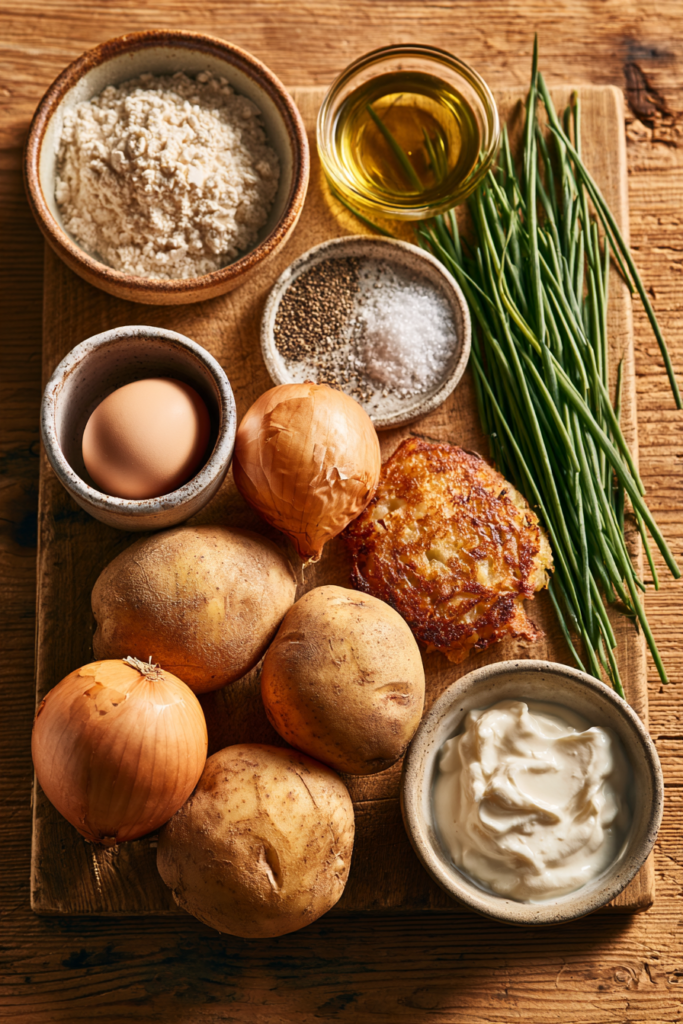
The Ingredients You’ll Need
You don’t need a long shopping list. Each ingredient has a practical purpose, so keep the mixture simple for your first batch.
| Ingredient | Amount | Purpose |
|---|---|---|
| Russet potatoes | 4 medium | Create the main texture |
| Yellow onion | 1 small | Adds savory flavor |
| Large egg | 1 | Helps bind the mixture |
| All-purpose flour | 3 tablespoons | Holds the pancakes together |
| Salt | 1 teaspoon | Brings out the flavor |
| Black pepper | ¼ teaspoon | Adds gentle warmth |
| Vegetable or canola oil | As needed | Creates a golden, crisp exterior |
| Sour cream | For serving | Adds a cool, creamy contrast |
| Fresh chives | For serving | Adds color and freshness |
Choosing the right potatoes: Russet potatoes are an excellent choice because their starchy texture helps the pancakes hold together and brown nicely. Yukon Gold potatoes can also work if you prefer a slightly creamier interior.
For another comforting potato dinner, try Crispy Chicken Ranch Baked Potatoes. They’re a delicious way to turn simple potatoes into a more filling meal.
How to Make Potato Pancakes Step by Step
The preparation is straightforward, but a few small details make the difference between an average pancake and one with a beautifully crisp finish. Prepare your ingredients before heating the skillet. That way, you can work comfortably and fry each batch without rushing.
Prepare and Drain the Grated Potatoes
Start by peeling the potatoes and rinsing them under cool water. Pat them dry, then grate them using the large holes of a box grater. You want visible potato shreds rather than a smooth puree.
Next, peel and grate the onion. Add it to the potatoes and mix gently.
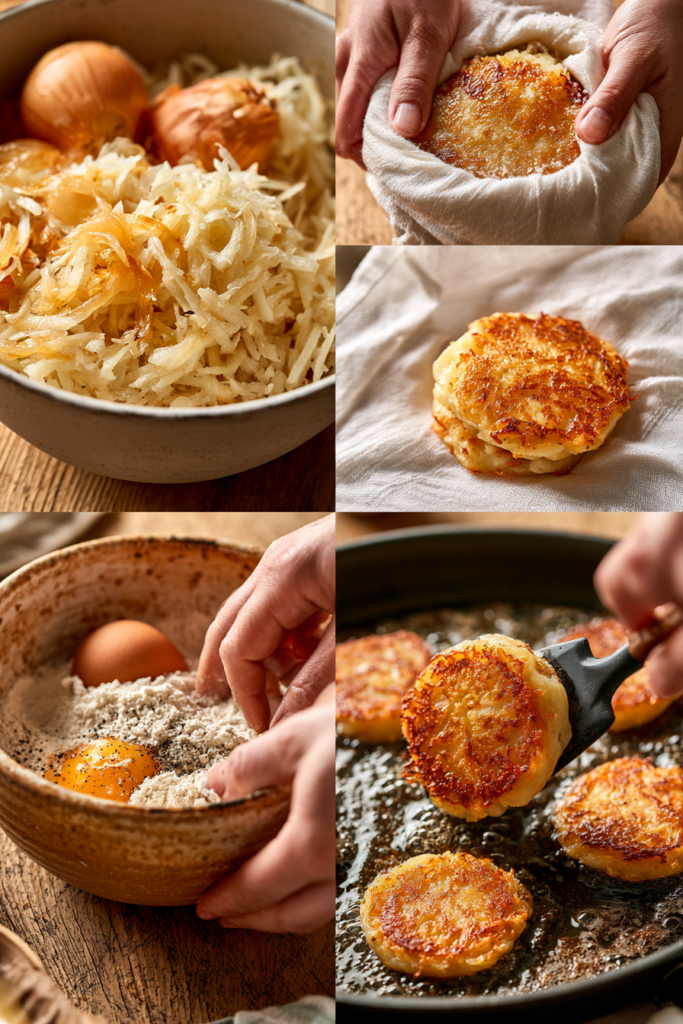
Now comes the important part. Transfer the grated mixture to a clean kitchen towel. Gather the corners, twist the towel, and squeeze firmly over the sink or a bowl. Keep squeezing until you remove as much liquid as possible.
Don’t skip this step. Excess moisture can make the batter watery, which makes it harder to form pancakes and encourages steaming instead of browning.
If you collect the liquid in a bowl, let it sit briefly. Some recipes use the starch that settles at the bottom to help bind the potato mixture. However, for this straightforward recipe, thoroughly squeezing the potatoes and using the measured flour and egg is enough.
Mix the Batter and Fry Until Golden
Place the drained potatoes and onion in a large mixing bowl. Add the egg, flour, salt, and black pepper. Stir until everything is evenly combined.
The mixture should look moist but not watery. If liquid begins collecting at the bottom, drain it before frying. If the mixture feels unusually loose, add another small spoonful of flour rather than adding a large amount all at once.
Heat a thin layer of vegetable or canola oil in a large skillet over medium to medium-high heat. The oil should shimmer gently, but it shouldn’t smoke.
Scoop about ¼ cup of the mixture into the skillet for each pancake. Leave enough space between them so the edges can brown properly. Then flatten each portion gently with the back of a spoon.
Cook for approximately 3–4 minutes on the first side. Once the edges look golden and the bottom feels firm, carefully flip each pancake. Cook the second side for another 3–4 minutes, adjusting the heat when necessary.
Transfer the cooked pancakes to a wire rack or a plate lined with paper towels. Season lightly while they’re still hot.
Cooking note: Exact frying time depends on pancake thickness, skillet temperature, and the amount of moisture left in the potatoes. Check that the center is fully cooked before serving.
Serving Ideas, Variations, and Storage Tips for Potato Pancakes
Freshly fried potato pancakes taste wonderful on their own. Still, the right topping can make them even better. Their mild, savory flavor works with creamy sauces, fresh herbs, eggs, and even a little sweetness.
Delicious Ways to Serve Potato Pancakes
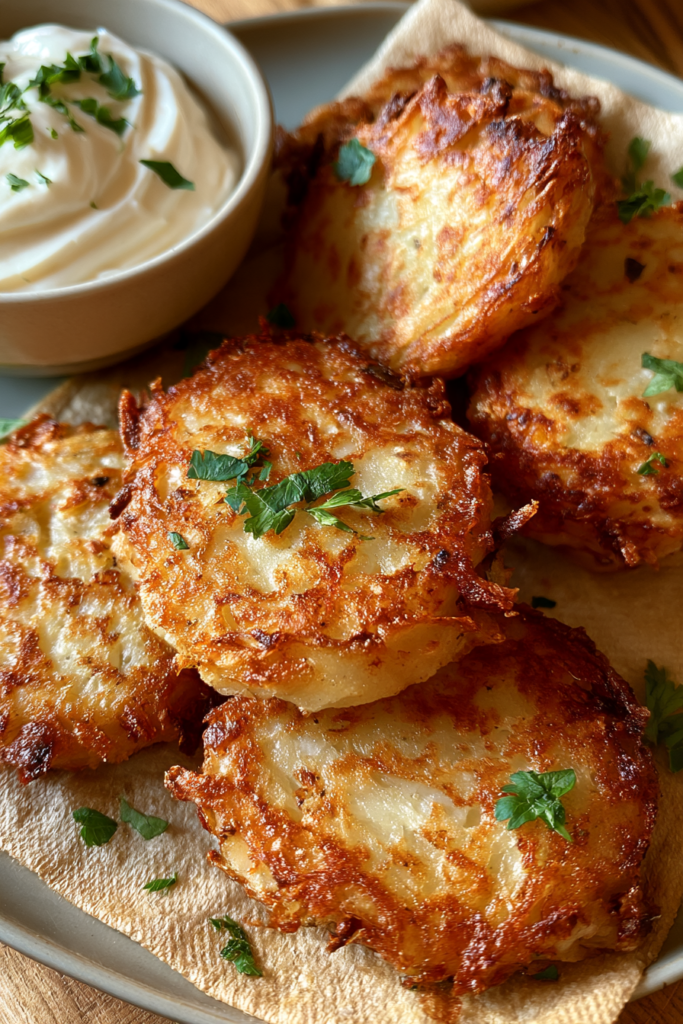
For a classic presentation, arrange the warm pancakes on a serving plate and add a spoonful of sour cream. Sprinkle chopped chives or green onions over the top for a fresh finish.
You can also try these combinations:
| Serving idea | What to add | Best for |
|---|---|---|
| Classic and creamy | Sour cream and fresh chives | Breakfast or brunch |
| Sweet and savory | Applesauce | A traditional-style serving |
| Hearty breakfast | Fried or scrambled eggs | A filling morning meal |
| Fresh and light | Greek yogurt and parsley | Lunch or a lighter side |
| Cheesy | A little grated cheddar | A richer snack |
| Spicy | Paprika and a pinch of chili flakes | A little extra warmth |
And don’t feel limited to breakfast. Serve potato pancakes alongside roasted vegetables, grilled chicken, or a fresh salad. They also make a lovely alternative to regular potatoes at dinner.
If you enjoy crispy potato sides, you’ll probably love Crispy Garlic Parmesan Potato Wedges. They’re another easy way to get golden, flavorful potatoes on the table.
Easy Variations and Ingredient Substitutions
Once you’ve made the basic recipe, you can adjust the flavor to suit your meal.
- Add fresh herbs: Mix chopped parsley, chives, or green onions into the batter.
- Make them garlicky: Add a small amount of garlic powder for a deeper savory flavor.
- Add gentle spice: A pinch of paprika or smoked paprika gives the pancakes a warmer taste.
- Try a different potato: Yukon Gold potatoes work well if you want a slightly creamier texture.
- Use a gluten-free alternative: Replace the all-purpose flour with a suitable gluten-free flour blend. Add it gradually until the mixture holds together.
- Make smaller pancakes: Use a tablespoon or two of batter per pancake for bite-sized appetizers.
One important tip: don’t overload the batter with extra ingredients. Too many vegetables or wet additions can change its consistency. If you want to add something like grated zucchini, squeeze it thoroughly before mixing it in.
Can you make them ahead? You can prepare the potatoes shortly before cooking, but grated potatoes may discolor when exposed to air. For the best color and texture, squeeze, mix, and fry them soon after grating.
Potato Pancakes: Troubleshooting, Storage, and FAQs
Even a simple recipe can have a few tricky moments. Maybe the pancakes fall apart when you flip them. Perhaps they brown too quickly, or they turn soft before reaching the table. Don’t worry. Most problems have an easy fix.
Common Potato Pancake Mistakes to Avoid
1. Leaving too much moisture in the potatoes
This is probably the biggest reason pancakes turn soft. Squeeze the grated potatoes thoroughly before adding the egg and flour. If the mixture releases more liquid while resting, drain it again.
2. Using too much flour
Flour helps bind the ingredients, but too much can make the pancakes heavy and doughy. Start with the recommended amount and add a little more only if the mixture cannot hold its shape.
3. Making the pancakes too thick
Thick pancakes can brown on the outside before the potato inside cooks completely. Flatten each portion gently so the heat can reach the center.
4. Frying at the wrong temperature
If the oil isn’t hot enough, the pancakes may absorb too much oil. On the other hand, extremely hot oil can darken the outside before the inside cooks. Medium to medium-high heat usually works well.
5. Crowding the skillet
Adding too many pancakes at once lowers the oil temperature and makes flipping difficult. Cook in batches and leave space between each portion.
6. Stacking them while they’re hot
Steam builds up between stacked pancakes and softens their crisp edges. Instead, place them in a single layer on a wire rack while you finish cooking the remaining batter.
How to Store and Reheat Leftovers
Potato pancakes taste best straight from the skillet, when the edges are still crisp. However, you can store leftovers and enjoy them later.
| Storage method | How long | Best approach |
|---|---|---|
| Refrigerator | Up to 3 days | Store in an airtight container |
| Freezer | About 2 months | Freeze in a single layer, then transfer to a freezer-safe container |
| Oven reheating | Until hot and crisp | Reheat at 375°F (190°C) |
| Air fryer reheating | A few minutes | Heat at 350°F (175°C), checking frequently |
Allow the pancakes to cool before refrigerating. To freeze them, place parchment paper between the layers so they don’t stick together.
For reheating, an oven or air fryer usually gives you a better texture than a microwave. Arrange the pancakes in a single layer and heat until hot throughout. The microwave works when you’re in a hurry, but the edges won’t be as crisp.
Food safety tip: Refrigerate cooked pancakes within two hours. Reheat leftovers thoroughly before serving.
Frequently Asked Questions
Why are my potato pancakes falling apart?
The mixture may contain too much moisture or not enough binder. Squeeze the potatoes more thoroughly, make sure you include the egg and flour, and allow the first side to become firm before flipping.
Should I soak potatoes before making potato pancakes?
Some recipes soak grated potatoes in cold water to remove excess starch, while others simply squeeze out the liquid. Both approaches can work, but they produce slightly different textures. For this recipe, squeezing the grated potatoes in a clean towel is the simplest method. Epicurious+1
Can I make potato pancakes without onion?
Yes. Simply leave out the onion and prepare the rest of the recipe as written. You can add chopped chives or parsley instead if you’d like a little extra flavor.
What oil is best for frying potato pancakes?
Vegetable oil and canola oil are practical choices because they have a neutral flavor and work well for skillet frying. Use enough to coat the bottom of the pan without completely submerging the pancakes.
Can I freeze homemade potato pancakes?
Yes. Let them cool completely, freeze them in a single layer, and then transfer them to a freezer-safe container. Reheat directly from frozen in the oven or air fryer until hot throughout.
Can I use leftover mashed potatoes?
Yes, but the result will be different. Mashed potato pancakes are softer and more like small potato cakes, while this recipe uses freshly grated raw potatoes for a shredded texture and crisp edges.
Final Thoughts
These homemade Potato Pancakes prove that simple ingredients can create something incredibly satisfying. With crispy golden edges, tender centers, and a delicious savory flavor, they’re perfect for breakfast, brunch, or dinner. Remember the most important trick: squeeze out the excess moisture before frying. Then cook the pancakes in batches, give them room in the skillet, and serve them while they’re hot. Add sour cream, fresh chives, or your favorite toppings, and you’ve got an easy recipe worth making again. Enjoy every crispy bite!
Print
Crispy Potato Pancakes: Easy, Golden, and Delicious
- Total Time: 35 mins
- Yield: 4 servings
- Diet: Vegetarian
Description
These crispy homemade potato pancakes are made with freshly grated potatoes, onion, egg, and flour. Golden and crunchy on the outside with a tender center, they’re perfect for breakfast, brunch, or an easy side dish.
Ingredients
4 medium russet potatoes, peeled and grated
1 small yellow onion, grated
1 large egg
3 tablespoons all-purpose flour
1 teaspoon salt
1/4 teaspoon black pepper
Vegetable or canola oil, for frying
Sour cream, for serving (optional)
Fresh chives, for serving (optional)
Instructions
1. Peel and grate the potatoes using the large holes of a box grater.
2. Grate the onion and combine it with the grated potatoes.
3. Transfer the potato and onion mixture to a clean kitchen towel and squeeze firmly to remove as much excess moisture as possible.
4. Place the drained mixture in a large bowl.
5. Add the egg, flour, salt, and black pepper. Mix until everything is evenly combined.
6. Heat a thin layer of vegetable or canola oil in a large skillet over medium to medium-high heat.
7. Scoop about 1/4 cup of the potato mixture into the skillet for each pancake.
8. Flatten each portion gently with the back of a spoon.
9. Cook for 3 to 4 minutes until the bottom is golden brown and crisp.
10. Carefully flip and cook for another 3 to 4 minutes until golden and cooked through.
11. Transfer the pancakes to a wire rack or paper towel-lined plate.
12. Serve hot with sour cream and fresh chives, if desired.
Notes
Squeeze the grated potatoes thoroughly to remove excess moisture and help the pancakes become crispy.
Russet potatoes work especially well because their starchy texture helps the pancakes hold together.
Avoid adding too much flour, as it can make the pancakes heavy.
Keep the pancakes relatively thin so the centers cook evenly.
Fry in batches without overcrowding the skillet.
Maintain medium to medium-high heat and adjust as needed to prevent burning.
Place cooked pancakes on a wire rack to help preserve their crispy edges.
Serve immediately with sour cream and fresh chives.
Refrigerate leftovers in an airtight container for up to 3 days.
Freeze cooled pancakes for up to 2 months, separating layers with parchment paper.
Reheat in an oven at 375°F (190°C) or an air fryer at 350°F (175°C) until hot and crisp.
- Prep Time: 15 mins
- Cook Time: 20 mins
- Category: Breakfast / Side Dish / Snack
- Method: Pan-Frying
- Cuisine: American