
Thanksgiving Stuffing is one of those classic holiday side dishes that can make the whole dinner feel complete. Imagine golden, toasted bread cubes mixed with buttery onions, tender celery, garlic, and fragrant herbs, all baked until the top turns beautifully crisp while the center stays soft and moist. Delicious, right? This homemade Thanksgiving Stuffing uses simple ingredients and an easy oven method, so you don’t need complicated techniques to get wonderful results. Even better, you can prepare much of it ahead of time, which means less rushing when the rest of your Thanksgiving dinner needs attention.
Why This Homemade Thanksgiving Stuffing Belongs on Your Holiday Table
A good Thanksgiving Stuffing should bring together several textures and flavors. You want a lightly crisp top, a tender middle, plenty of savory herbs, and enough buttery richness to make every bite satisfying. Fortunately, you can achieve all of that with everyday ingredients.
This version uses sturdy bread, onion, celery, garlic, butter, fresh herbs, eggs, and vegetable broth. It contains no meat, so it works as a vegetarian-friendly side dish when you choose vegetable broth and check your bread and other ingredient labels.
What Makes Thanksgiving Stuffing So Delicious?
The secret is balance. Bread provides the foundation, while butter carries the flavor of the vegetables and herbs throughout the dish. Meanwhile, onion and celery create the familiar savory base that makes traditional stuffing taste so comforting.
Fresh sage, thyme, rosemary, and parsley add layers of flavor without making the recipe complicated. Sage gives the dish its recognizable holiday character, thyme adds an earthy note, and rosemary brings a gentle pine-like fragrance. Parsley, on the other hand, keeps everything tasting fresh.
The broth matters, too. Add enough to soften the bread without turning it into a soggy mixture. Eggs help hold the ingredients together and create a tender, cohesive center as the stuffing bakes.
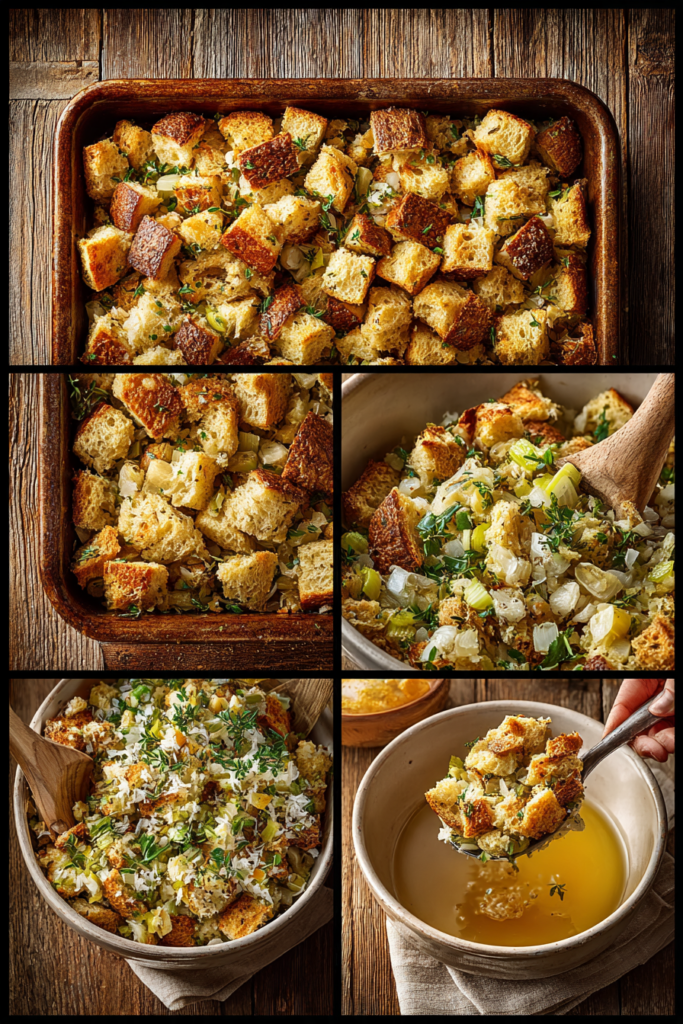
Finally, baking the stuffing in a separate casserole dish gives you more control over the texture. You can uncover it near the end of cooking and let the top become golden and crisp.
Ingredients for Classic Thanksgiving Stuffing
Makes approximately 10 servings
| Ingredient | Amount | Purpose |
|---|---|---|
| Sturdy day-old bread | 12 cups, cubed | Creates the base |
| Unsalted butter | ½ cup | Adds richness |
| Yellow onion | 2 cups, chopped | Builds savory flavor |
| Celery | 1½ cups, chopped | Adds freshness and texture |
| Garlic | 3 cloves, minced | Adds depth |
| Fresh sage | 1½ tablespoons, chopped | Classic holiday flavor |
| Fresh thyme | 1 tablespoon | Earthy aroma |
| Fresh rosemary | 1 teaspoon, chopped | Adds herbal warmth |
| Fresh parsley | ½ cup, chopped | Brightens the mixture |
| Vegetable broth | 2½–3 cups | Moistens the bread |
| Large eggs | 2 | Help bind the stuffing |
| Salt | 1 teaspoon, or to taste | Balances the flavors |
| Black pepper | ½ teaspoon | Adds gentle warmth |
| Olive oil or butter | As needed | Greases the baking dish |
A quick note about the bread: Choose a sturdy loaf such as sourdough, French bread, Italian bread, or country-style white bread. Avoid very soft bread because it can break down when you add the broth.
The most important preparation step is drying the bread. Slightly stale or toasted cubes absorb the flavorful liquid while keeping their shape. This is a technique commonly recommended in classic stuffing recipes from Food Network and Martha Stewart.

How to Make Thanksgiving Stuffing Step by Step
Once you prepare the bread and vegetables, the rest comes together in a few straightforward steps. Take your time with the vegetable mixture, measure the broth gradually, and avoid packing the casserole too tightly.
Dry the Bread Cubes
Preheat your oven to 300°F (150°C). Cut the bread into roughly ¾- to 1-inch cubes and spread them across one or two baking sheets.
Bake for approximately 15–20 minutes, stirring once if necessary. The cubes should feel dry and slightly crisp, but they don’t need to become deeply browned.
Remove them from the oven and let them cool completely. If you have time, you can also cut the bread a day ahead and leave the cubes loosely covered at room temperature until they’re dry.
Why does this matter? Fresh bread contains more moisture, so it can turn mushy when mixed with broth. Dry bread absorbs the liquid more evenly and helps create the soft-center, crisp-top texture that makes Thanksgiving Stuffing so enjoyable.
Cook the Onion, Celery, Garlic, and Herbs
Increase the oven temperature to 375°F (190°C). Grease a 9-by-13-inch baking dish with butter or olive oil.
Next, melt the butter in a large skillet over medium heat. Add the chopped onion and celery. Cook for about 7–9 minutes, stirring occasionally, until the vegetables soften.
Add the minced garlic, sage, thyme, rosemary, salt, and black pepper. Stir for another minute or two, just until the herbs become fragrant.
Remove the skillet from the heat and stir in the fresh parsley.
Don’t rush this stage. Softening the vegetables allows their flavors to blend with the butter, while briefly heating the herbs releases their aroma. However, you don’t need to brown everything heavily. The goal is a tender, fragrant mixture.
Combine the Bread and Broth
Place the cooled bread cubes in a large mixing bowl. Add the buttery vegetable mixture and gently toss until the bread is evenly coated.
In a separate bowl, whisk the eggs with 2½ cups of vegetable broth. Pour the mixture over the bread gradually, tossing as you go.
Check the texture before adding more liquid. The bread should feel moist throughout, but it shouldn’t swim in broth. If the cubes still seem dry, add a little more broth, a few tablespoons at a time.
Transfer the mixture to your prepared baking dish. Spread it into an even layer without pressing it down too firmly.
Bake Until Golden and Tender
Cover the baking dish loosely with foil and bake for 30 minutes.
Then remove the foil and continue baking for another 25–30 minutes. The top should become golden brown, with crisp edges and a tender center.
If you prefer a particularly crunchy surface, leave the dish uncovered for a few extra minutes, watching carefully so the top doesn’t burn.
Let the Thanksgiving Stuffing rest for approximately 5–10 minutes before serving. This short rest helps the mixture settle and makes it easier to scoop.
Cooking temperatures and the use of dried bread, broth, and a covered-then-uncovered baking method are consistent with techniques found in established classic stuffing recipes. Kitchn+2
Thanksgiving Stuffing Tips, Variations, and Make-Ahead Ideas
A few small decisions can make a noticeable difference in the finished dish. Whether you’re preparing your first homemade stuffing or adding another side to a large holiday menu, these tips will help you get the texture and flavor right.
7 Easy Tips for Better Thanksgiving Stuffing
- Use sturdy bread. Sourdough, French, and country loaves hold their shape better than very soft sandwich bread.
- Dry the cubes properly. Dry bread absorbs broth more evenly and helps prevent a mushy center.
- Soften the vegetables first. Cook the onion and celery until tender so they don’t remain crunchy after baking.
- Use fresh herbs when possible. Sage, thyme, rosemary, and parsley give the stuffing a fragrant, balanced flavor.
- Add broth gradually. Different breads absorb different amounts of liquid, so don’t pour it all in automatically.
- Don’t pack the dish tightly. A loose, even layer allows the stuffing to bake more evenly.
- Uncover the dish near the end. This gives the top time to turn golden and crisp while the middle stays tender.
Easy Variations to Try
One of the best things about homemade Thanksgiving Stuffing is how easy it is to adapt. Once you have the basic bread-and-herb mixture ready, you can introduce a few extra ingredients without changing the entire method.
| Variation | What to Add | Flavor and Texture |
|---|---|---|
| Apple stuffing | 1 cup diced apple | Slightly sweet and fresh |
| Cranberry stuffing | ½ cup dried cranberries | Sweet-tart contrast |
| Pecan stuffing | ½ cup chopped toasted pecans | Crunchy and nutty |
| Mushroom stuffing | 1 cup cooked mushrooms | Deep, savory flavor |
| Cornbread stuffing | Replace part of the bread with cornbread | Softer, slightly sweet texture |
| Garlic herb stuffing | Add extra garlic and parsley | More aromatic and savory |
For an especially festive version, dried cranberries and toasted pecans make a lovely combination. Add them when you combine the bread and vegetables so they distribute evenly.
You can also adjust the herbs to suit your taste. Prefer a stronger sage flavor? Add a little more. Want something milder? Reduce the rosemary and let the parsley and thyme shine.
Can You Make Thanksgiving Stuffing Ahead of Time?
Absolutely. Preparing the stuffing ahead can make holiday cooking much easier.
You have two convenient options:
Option 1: Prepare the components separately.
- Cut and dry the bread cubes.
- Chop the onion, celery, garlic, and herbs.
- Cook the vegetable mixture in butter.
- Store the prepared components separately in the refrigerator where appropriate.
- Combine everything with the eggs and broth shortly before baking.
Option 2: Assemble the casserole ahead.
Prepare the recipe through the assembly stage, transfer it to the baking dish, cover it, and refrigerate it promptly. For best quality, bake it within 24 hours. If the mixture looks dry after refrigeration, add a small splash of broth before baking.
Since the casserole starts cold, it may need extra oven time. Check that the center reaches a safe temperature rather than relying only on the cooking time.
Make-ahead assembly is also discussed in recipes from Food Network and The Kitchn. Food Network+1
What to Serve with Thanksgiving Stuffing
Thanksgiving Stuffing pairs beautifully with roasted turkey, vegetables, creamy potatoes, and other comforting sides. Its buttery herbs complement rich main dishes, while the crisp bread adds another texture to the plate.
For a complete holiday spread, serve it alongside your favorite roast turkey, roasted vegetables, and cranberry sauce.
You can also add Creamy Baked Mac and Cheese for another comforting side. And if you want something golden, cheesy, and easy to share, The Ultimate Cheesy Garlic Bread makes a delicious addition to a larger holiday meal.

Thanksgiving Stuffing FAQs, Storage, and Final Thoughts
Frequently Asked Questions
Is Thanksgiving Stuffing the same as dressing?
The terms often describe similar bread-based dishes. Some families call it stuffing whether they bake it inside or outside the bird, while others use dressing for a casserole baked separately. Regional and family traditions influence the name.
Why is my stuffing soggy?
Too much broth, very fresh bread, or tightly packed ingredients can create a soggy texture. Use dried bread cubes and add the broth gradually. You can also uncover the casserole during the final part of baking to help the surface crisp.
Can I use dried herbs instead of fresh herbs?
Yes. Dried herbs work well when fresh ones aren’t available. However, dried herbs have a more concentrated flavor, so use smaller amounts. Start with about one teaspoon of dried sage for each tablespoon of fresh sage, adjusting to taste.
Can I make this recipe without eggs?
Yes. You can omit the eggs, although the finished stuffing may be looser and less cohesive. Use enough broth to moisten the bread without soaking it completely, and check the texture as it bakes.
Can I use chicken broth instead of vegetable broth?
Yes, if you don’t need the recipe to be vegetarian. Chicken or turkey broth gives the stuffing a deeper savory flavor. Choose low-sodium broth so you can control the salt.
How do I know when the stuffing is done?
The top should look golden and crisp, while the center should feel hot and set. Because this recipe contains eggs, check the center with a food thermometer. It should reach 165°F (74°C).
How to Store and Reheat Leftover Stuffing
Let the stuffing cool slightly, then transfer leftovers to an airtight container. Refrigerate within two hours of cooking and use within 3–4 days.
To reheat, place a portion in an oven-safe dish, add a small splash of vegetable broth if it seems dry, cover with foil, and warm at 350°F (175°C) until heated through. Remove the foil near the end if you want to restore the crispy top.
You can also freeze cooked stuffing in airtight, freezer-safe portions for up to 2–3 months for best quality. Thaw it in the refrigerator before reheating, and make sure the center reaches 165°F (74°C).
Final Thoughts
This Thanksgiving Stuffing brings together everything you want from a classic holiday side: buttery bread, tender vegetables, fragrant herbs, a soft center, and a beautifully golden top. Best of all, the ingredients are simple, the steps are manageable, and you can prepare much of the recipe ahead of time.
Serve it with your favorite holiday dishes, add a handful of cranberries or pecans if you like, and enjoy a homemade side that deserves a place on the Thanksgiving table.
Print
Thanksgiving Stuffing: 7 Easy Tips for Buttery, Crispy, Flavorful Results
- Total Time: 1 hour 40 mins
- Yield: 10 servings
- Diet: Vegetarian
Description
Classic homemade Thanksgiving Stuffing made with golden toasted bread cubes, buttery onions, tender celery, garlic, and fresh herbs. Baked until crispy on top and soft in the center, this easy holiday side dish is perfect for Thanksgiving dinner.
Ingredients
12 cups day-old sturdy bread, cut into cubes
1/2 cup unsalted butter
2 cups yellow onion, chopped
1 1/2 cups celery, chopped
3 garlic cloves, minced
1 1/2 tablespoons fresh sage, chopped
1 tablespoon fresh thyme
1 teaspoon fresh rosemary, chopped
1/2 cup fresh parsley, chopped
2 1/2 to 3 cups vegetable broth
2 large eggs
1 teaspoon salt, or to taste
1/2 teaspoon black pepper
Butter or olive oil for greasing the baking dish
Instructions
1. Preheat oven to 300°F (150°C). Spread the bread cubes on baking sheets and bake for 15–20 minutes until dry and lightly crisp. Let cool.
2. Increase oven temperature to 375°F (190°C) and grease a 9-by-13-inch baking dish.
3. Melt the butter in a large skillet over medium heat. Add the onion and celery and cook for 7–9 minutes until softened.
4. Add the garlic, sage, thyme, rosemary, salt, and black pepper. Cook for another 1–2 minutes until fragrant, then stir in the parsley.
5. Place the dried bread cubes in a large mixing bowl. Add the buttery vegetable mixture and toss gently.
6. Whisk the eggs with 2 1/2 cups vegetable broth. Pour gradually over the bread mixture, tossing until evenly moistened. Add more broth a little at a time if needed.
7. Transfer the mixture to the prepared baking dish and spread into an even layer without packing it tightly.
8. Cover loosely with foil and bake for 30 minutes.
9. Remove the foil and bake for another 25–30 minutes until the top is golden and crisp and the center reaches 165°F (74°C).
10. Let rest for 5–10 minutes before serving.
Notes
Use sturdy sourdough, French bread, Italian bread, or country-style bread for the best texture.
Dry the bread cubes thoroughly to prevent soggy stuffing.
Add vegetable broth gradually because different breads absorb different amounts of liquid.
For a festive variation, add 1/2 cup dried cranberries or toasted pecans.
Use chicken or turkey broth instead of vegetable broth if you do not need a vegetarian version.
Refrigerate leftovers in an airtight container for 3–4 days.
Reheat covered at 350°F (175°C) until hot, then uncover briefly to crisp the top.
Freeze cooked stuffing for up to 2–3 months for best quality.
- Prep Time: 25 mins
- Cook Time: 55–60 mins
- Category: Side Dish
- Method: Baking
- Cuisine: American