
Crispy Fish Fillets with Sparkling Water Batter deliver tender, flaky fish wrapped in a light, golden coating. The secret is simple: ice-cold sparkling water, a little cornstarch, and properly heated oil. Together, these ingredients create a satisfying crunch without using beer. Whether you’re planning a family dinner or craving homemade fish and chips, this easy recipe brings delicious results to your table. Serve the fillets with lemon wedges, crispy potatoes, or a fresh salad for a complete meal. Best of all, you can prepare this comforting favorite with everyday ingredients and a few practical cooking techniques.
Why Crispy Fish Fillets with Sparkling Water Batter Are So Delicious
What Makes This Fish Batter Light and Crunchy?
Have you ever made fried fish at home only to discover that the coating turns soft before dinner reaches the table? The good news is that a few simple techniques can help you avoid that problem.
Crispy Fish Fillets with Sparkling Water Batter rely on a light mixture that coats the fish without creating a thick, doughy crust. The carbonation in sparkling water helps aerate the batter, while cornstarch contributes to a crisp texture. Baking powder adds extra lift, giving the coating an appealing crunch.
According to BBC Good Food’s fish-battering guide, sparkling water helps create an aerated coating around the fish. Meanwhile, Better Basics Milling Company recommends cold sparkling water, gentle mixing, and a hot frying temperature for crisp results.
Honestly, the technique is straightforward. Keep the ingredients cold, avoid overmixing, and fry the fish in small batches. Those little details make a noticeable difference.
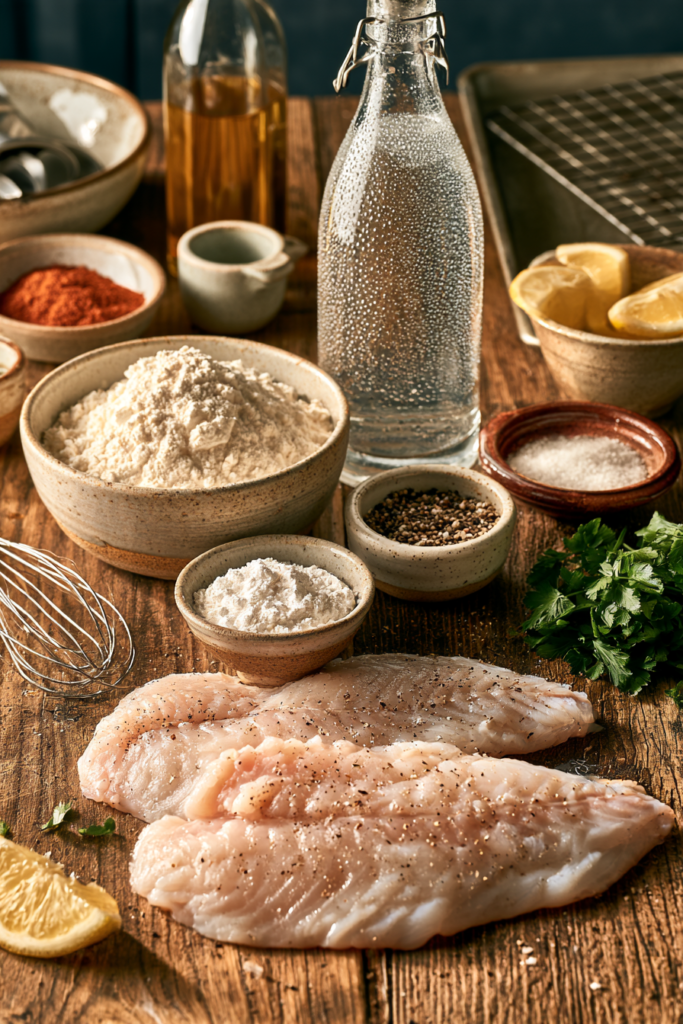
Ingredients You’ll Need
This recipe makes four servings and uses simple ingredients you can find at most grocery stores.
| Ingredient | Amount | Purpose |
|---|---|---|
| White fish fillets | 600 g (1⅓ lb) | Tender, flaky center |
| All-purpose flour | 1 cup (125 g) | Forms the coating |
| Cornstarch | ½ cup (60 g) | Helps create a crisp crust |
| Baking powder | 1 tsp | Lightens the batter |
| Ice-cold sparkling water | 1 cup (240 ml), approximately | Helps aerate the batter |
| Salt | 1 tsp, divided | Enhances flavor |
| Black pepper | ½ tsp | Adds gentle seasoning |
| Paprika | ½ tsp, optional | Adds color and warmth |
| Extra flour | ¼ cup | Helps the batter adhere |
| Vegetable oil | As needed | For frying |
| Lemon wedges | For serving | Adds freshness |
| Fresh parsley | Optional | Garnish |
Cod, haddock, and pollock are excellent options because their mild flavor pairs well with the seasoned coating. Choose fillets of similar thickness so they cook evenly.
Before you begin, pat the fish dry with paper towels. This simple step helps the batter cling to the surface instead of sliding off.
How to Prepare Crispy Fish Fillets with Sparkling Water Batter
Prepare the Fish and Mix the Batter
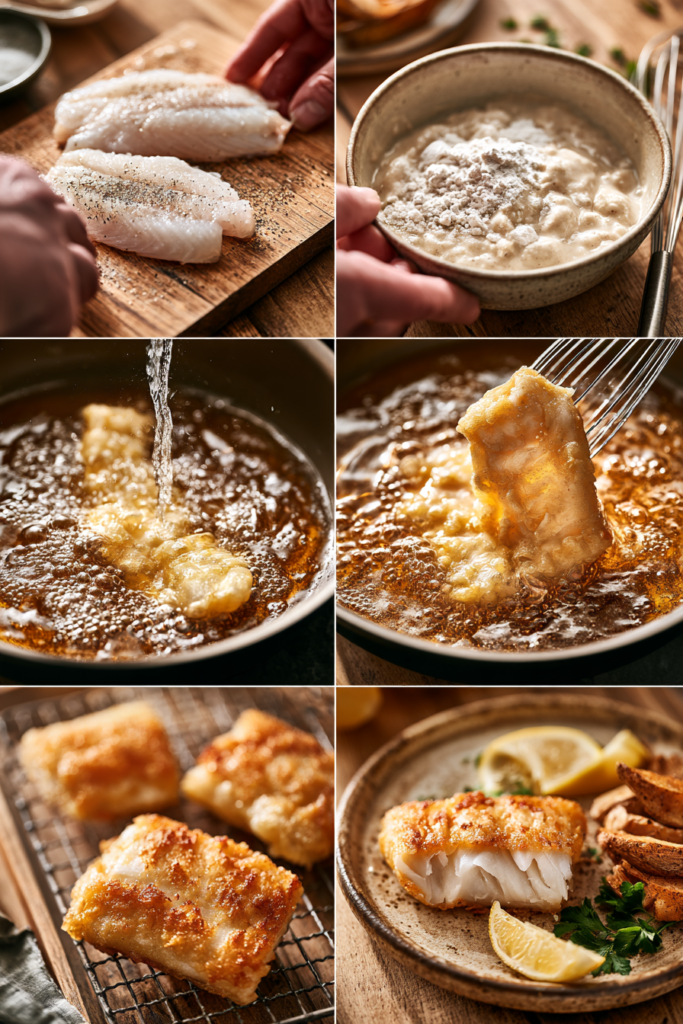
Start by cutting the fish into four similarly sized portions. If the fillets are unusually thick, divide them into smaller pieces to help them cook more evenly.
Next, pat each piece dry and season lightly with salt and black pepper. Place the extra flour in a shallow bowl for dusting later.
In a separate mixing bowl, combine the all-purpose flour, cornstarch, baking powder, remaining salt, black pepper, and optional paprika. Pour in the ice-cold sparkling water and stir gently until the ingredients come together.
The batter should resemble thin pancake batter. It needs to coat the fish while remaining loose enough for the excess to drip away. A few small lumps are perfectly fine, so don’t keep whisking in an attempt to make it completely smooth.
Here’s the thing: prepare the batter shortly before frying. Leaving it to stand for too long allows some of the carbonation to escape, which can affect the texture.
Coat and Fry the Fish Fillets
Pour vegetable oil into a deep, heavy-based pot, leaving plenty of space at the top. Heat it to approximately 350–365°F (175–185°C), using a kitchen thermometer to check the temperature.
For safety, never fill the pot more than halfway with oil, and keep water away from the hot oil.
Meanwhile, lightly coat each fish fillet with the extra flour. Shake off any excess, dip the fish into the batter, and let the surplus drip back into the bowl.
Carefully lower the coated fillets into the hot oil, working away from yourself. Fry in small batches to maintain a steady temperature.
Thin pieces may take around 4–6 minutes, while thicker fillets can require 6–8 minutes. Turn them gently when necessary, cooking until the coating becomes golden and crisp.
Most importantly, check the thickest part of the fish. It should reach an internal temperature of 145°F (63°C), with opaque flesh that flakes easily.
Remove the finished fillets with a slotted utensil and place them on a wire rack. For further guidance on sparkling-water batter and frying, see CCT Venues’ fish and chips recipe.
Seven Tips for Perfectly Crispy Fish Fillets
Seven Secrets to a Golden, Crunchy Coating
1. Keep the sparkling water cold. Refrigerate it before cooking. Cold sparkling water helps keep the batter light, so add it immediately before frying.
2. Dry the fish thoroughly. Excess moisture makes it harder for the coating to stick. Pat each fillet dry before dusting it with flour.
3. Avoid overmixing. Stir just until the dry ingredients combine with the water. Overworking the batter can make the coating heavier.
4. Maintain the oil temperature. Aim for 350–365°F (175–185°C). Oil that’s too cool can leave the coating greasy, while excessively hot oil can brown the outside before the fish cooks through.
5. Fry in small batches. Adding too many pieces at once lowers the oil temperature. Instead, cook a few fillets at a time and allow the oil to return to temperature between batches.
6. Drain the fish on a wire rack. A rack allows air to circulate around the coating. Paper towels can trap steam underneath the fish, softening the crust.
7. Serve the fish immediately. Add a small pinch of salt while the coating is hot, then serve with fresh lemon. The contrast between crunchy batter and tender fish is best when everything is freshly cooked.
These techniques work together. Even a good batter can become soggy if the oil temperature drops or the cooked fish sits covered for too long.
Common Mistakes and How to Fix Them
| Problem | Likely Cause | Solution |
|---|---|---|
| Batter slides off | Fish was wet | Pat the fish dry and dust with flour |
| Coating turns soggy | Oil was too cool | Check the oil temperature |
| Outside browns too quickly | Oil was too hot | Reduce the heat and monitor it |
| Batter feels heavy | Overmixing | Stir gently and stop once combined |
| Fish becomes dry | Overcooking | Check the internal temperature |
| Coating softens after frying | Steam gets trapped | Use a wire rack and avoid covering |
If you’re preparing several batches, keep the cooked fillets on a wire rack in an oven set to approximately 200°F (95°C) for a short period. However, serve them as soon as possible for the best crunch.
Serving, Variations, and Storage for Crispy Fish Fillets
Serving Suggestions and Easy Variations
Crispy Fish Fillets with Sparkling Water Batter pair beautifully with simple sides. For a classic fish-and-chips-inspired dinner, serve them with potato wedges, lemon wedges, and a tangy dipping sauce.
Alternatively, add coleslaw or a crisp green salad for freshness. You can also tuck the fish into sandwich rolls with lettuce, sliced tomato, and a creamy sauce.
For another satisfying dinner idea, try Morselmoon’s Cheeseburger Wrap Hack: The Easy, Crispy Burger Wrap You’ll Crave. It offers a different take on a crunchy, comforting meal.
If you’re planning your weekly menu, Steak and Cheese Tortellini: 7 Easy Tips for a Creamy, Flavorful Dinner is a hearty pasta option for another evening. You could also try Creamy Cheesy Beef Stuffed Shell Pasta: 7 Easy Tips for a Delicious Family Dinner when you’re craving a baked, cheese-filled dinner.
Want to customize the fish? Add garlic powder, onion powder, or smoked paprika to the dry ingredients. For a brighter flavor, add a little finely grated lemon zest. You can also cut the fillets into strips to make homemade fish fingers; simply adjust the cooking time according to their thickness.
Make-Ahead, Storage, and Reheating
For the best results, prepare the dry batter ingredients in advance, but add the sparkling water just before frying. This keeps the preparation convenient without sacrificing the coating’s texture.
You can also portion and season the fish ahead of time. Keep it covered in the refrigerator until you’re ready to cook, then pat it dry again if necessary.
Storing leftovers: Refrigerate cooked fish in a covered container within two hours. For the best quality, eat it within one to two days.
Reheating in the oven: Place the fillets on a wire rack over a baking sheet and warm them at 350°F (175°C) until hot throughout. This helps restore some of the crispness.
Reheating in an air fryer: Arrange the cooked fish in a single layer and heat until hot and crisp, checking frequently to avoid drying it out.
Freezing: Cooked battered fish can be frozen, although the coating may lose some crispness after thawing. Cool it promptly, pack it securely, and reheat thoroughly before serving.
Avoid storing the fish while it’s still steaming hot in a tightly sealed container, as trapped moisture can soften the coating. Also, discard any leftover batter that has contacted raw fish.

Frequently Asked Questions
Can I make crispy fish batter without beer?
Yes. Ice-cold sparkling water provides carbonation for a light coating without using beer. The result is a crisp, golden batter with a neutral flavor that lets the fish shine.
Which fish works best?
Cod, haddock, and pollock are reliable choices. Look for firm, mild white fish and select fillets of similar thickness for even cooking.
Why is my batter not crispy?
The most common causes are oil that’s too cool, wet fish, overcrowded frying, and trapped steam. Keep the oil temperature steady, fry in batches, and drain the finished fish on a rack.
Can I make the batter ahead?
It’s better to mix the dry ingredients ahead and add the sparkling water just before frying. This helps preserve the carbonation and produces a lighter coating.
How do I know when the fish is cooked?
The coating should be golden and crisp, and the flesh should be opaque and flake easily. For food safety, the thickest part should reach 145°F (63°C).
Can I make this recipe in an air fryer?
Traditional wet batter can drip through an air-fryer basket, so deep-frying is the more reliable method for this particular recipe. For an air-fryer version, use a dry breadcrumb coating designed for air frying.
Final Thoughts
Crispy Fish Fillets with Sparkling Water Batter show that you don’t need complicated ingredients to make a satisfying homemade fish dinner. Cold sparkling water, a balanced flour mixture, and carefully controlled oil temperature create a light coating with a delicious crunch.
Remember the essentials: dry the fish, mix the batter gently, fry in small batches, and drain on a wire rack. Then serve the fillets hot with lemon and your favorite sides.
Whether you’re making fish and chips, a fish sandwich, or a simple family dinner, this versatile recipe gives you a reliable starting point for a golden, crunchy meal.
Print
Crispy Fish Fillets with Sparkling Water Batter: 7 Easy Tips for a Golden Crunch
- Total Time: 35 mins
- Yield: 4 servings
Description
Crispy Fish Fillets with Sparkling Water Batter feature tender, flaky white fish coated in a light, golden, crunchy batter made without beer. Serve with lemon wedges, potato wedges, or a fresh salad for an easy family dinner.
Ingredients
600 g (1⅓ lb) white fish fillets, such as cod, haddock, or pollock
1 cup (125 g) all-purpose flour
½ cup (60 g) cornstarch
1 tsp baking powder
1 cup (240 ml) ice-cold sparkling water, approximately
1 tsp salt, divided
½ tsp black pepper
½ tsp paprika (optional)
¼ cup all-purpose flour, for dusting
Vegetable oil, for frying
Lemon wedges, for serving
Fresh parsley, chopped (optional)
Instructions
1. Cut the fish into four evenly sized portions and pat thoroughly dry with paper towels.
2. Season the fish lightly with salt and black pepper.
3. In a bowl, combine 1 cup flour, cornstarch, baking powder, remaining salt, black pepper, and optional paprika.
4. Add the ice-cold sparkling water and stir gently until combined. Do not overmix; a few small lumps are fine.
5. Pour vegetable oil into a deep, heavy pot, leaving plenty of room at the top. Heat to 350–365°F (175–185°C).
6. Lightly dust each fish fillet with the extra flour and shake off the excess.
7. Dip each fillet into the batter, allowing excess batter to drip back into the bowl.
8. Carefully lower the battered fish into the hot oil, frying in small batches to maintain the temperature.
9. Fry for approximately 4–8 minutes, depending on thickness, turning gently if needed, until golden and crisp.
10. Check that the thickest part of the fish reaches 145°F (63°C) and flakes easily.
11. Remove the fish with a slotted utensil and drain on a wire rack.
12. Garnish with fresh parsley if desired and serve immediately with lemon wedges.
Notes
Keep the sparkling water ice-cold and mix the batter just before frying.
Pat the fish dry and dust it lightly with flour so the batter sticks.
Avoid overmixing the batter; a few small lumps are fine.
Fry in small batches and maintain the oil temperature between 350–365°F (175–185°C).
Use a thermometer to check that the fish reaches 145°F (63°C) internally.
Drain cooked fillets on a wire rack to help keep the coating crisp.
Serve immediately with potato wedges, salad, or your favorite dipping sauce.
- Prep Time: 15 mins
- Cook Time: 20 mins
- Category: Main Course, Dinner
- Method: Deep-frying
- Cuisine: British-inspired